
You deliver. Your team delivers. So why does it still feel stuck?
You know who you are. But do you know how you land?
What holds a capable leader back is rarely a skills gap. It is the Leadership Shadow: unconscious patterns that take over under pressure and that everyone sees except you. The Leadership Circle Profile makes them visible. I am a Certified Practitioner and have debriefed more than 100 leaders with it.
30 minutes · confidential · no pitch
Clarity becomes impact. For you, your team and your results.
You lead on purpose, not on autopilot
You know what drives you under pressure and can choose differently. You stay calm in hard conversations, and the people around you notice the difference.
A team that talks and owns
Trust grows, conflicts are named early instead of avoided, and people take ownership instead of waiting for you. The team works with you, not around you.
Goals that actually get reached
Priorities show up in the calendar, decisions stop circling, and the energy goes into the work that matters. Results become repeatable, without burning out the team.
Typical ranges from my work with leaders and teams after the LCP debrief and the coaching that follows. Every leader starts from a different place, so these are experiences, not guarantees.
A model of leadership that looks beneath behaviour.
Leadership Circle is an international leadership development organisation founded by Bob Anderson and Bill Adams, the authors of Mastering Leadership. Its central instrument is the Leadership Circle Profile. Most 360° tools stop at behaviour. The LCP also shows the beliefs and assumptions underneath it, the inner operating system that decides how you lead when it matters.
The model in four minutes, by Leadership Circle. The video plays via YouTube once you click.
In conversation with Richard Oakes, CEO of Ohten Group (LinkedIn). We met when we were both accredited in the Leadership Circle. Three minutes on the creative and the reactive side of leadership.
“It’s about them. It’s not about us.”
Not a skills gap. A pattern you cannot see.
Every leader has a default mode for pressure. It once protected you and helped you succeed. Under a tight deadline, in conflict or in change, it still takes over: you control, you please, or you withdraw.
From the outside, that pattern shows up as slow decisions, quiet teams and good people leaving. From the inside, it simply feels like doing your job. You cannot change a pattern you cannot see.
Creative competencies
↑ The creative answer sits above
Reactive tendencies
A tight deadline. Under pressure, the pull is Controlling.
Hover or tap a field to explore it.
Own illustration. Leadership Circle Profile® is a registered trademark of The Leadership Circle.
Two sides of leadership. One honest picture.
What makes leadership work
The competencies that build trust, focus and results that last.
- Relating · real connection, teams that pull togetherCaring ConnectionFosters Team PlayCollaboratorMentoring & DevelopingInterpersonal Intelligence
- Self-Awareness · composure, balance, learningSelfless LeaderBalanceComposurePersonal Learner
- Authenticity · integrity and the courage to say itIntegrityCourageous Authenticity
- Systems Awareness · seeing the whole, not just your cornerCommunity ConcernSustainable ProductivitySystems Thinker
- Achieving · strategy, purpose, decisive resultsStrategic FocusPurposeful & VisionaryAchieves ResultsDecisiveness
What holds it back
Strategies that once worked and protected you. Under pressure, they take over.
- Complying · keeping everyone happy, playing it safeConservativePleasingBelongingPassive
- Protecting · distance, criticism, staying above itArroganceCriticalDistance
- Controlling · perfection, overdrive, doing it yourselfPerfectDrivenAmbitionAutocratic
Both sides, seen by you and by the people around you: your manager, peers and direct reports. The gaps between those views are where the real learning starts.
Your scores are shown as percentiles against leaders worldwide. Feedback is anonymous by group, and the results belong to you: the profile is built for development, not for performance appraisal.
Reactive patterns are not character flaws. They are strategies that worked once. The question is what they cost you now.
You know your intentions. Your team only sees your behaviour.
Most leaders know themselves well, and still underestimate how they come across in a tense meeting, a quick reply or a decision under pressure. The LCP puts both views side by side: how you see yourself, and how your manager, peers and team actually experience you. That gap is not a verdict. It is the most useful information you will get this year.
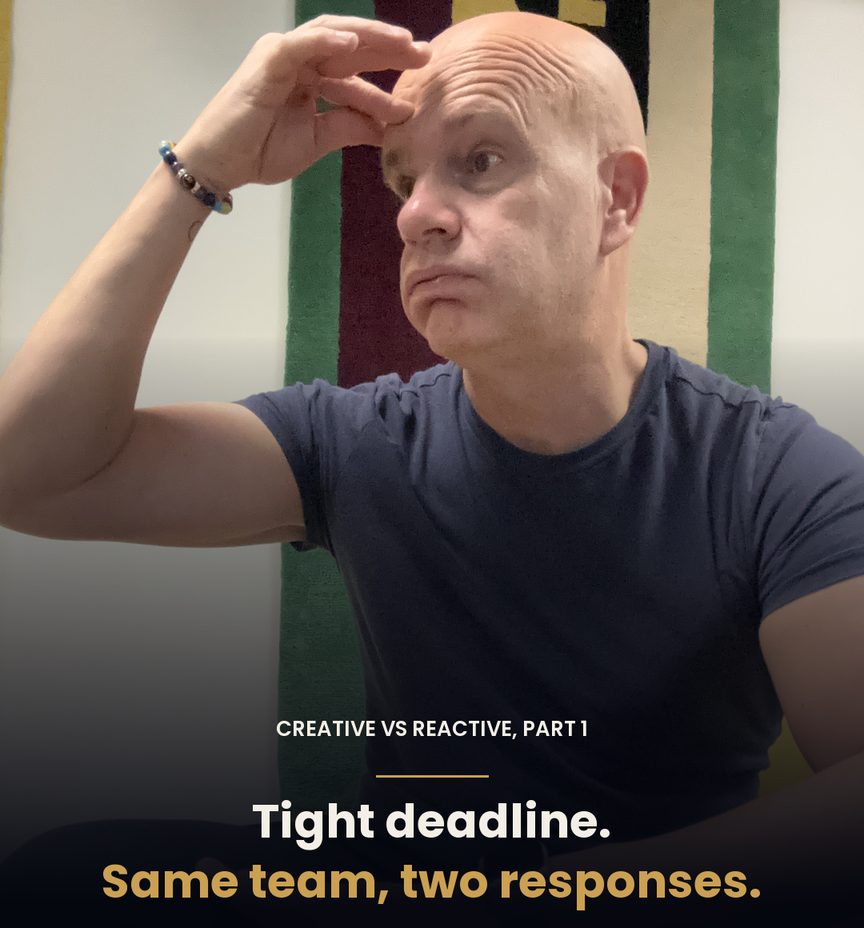
A tight deadline. Which answer does your team hear?
“Send it to me, I will finish it tonight.”
What tends to happen: the delivery gets out. Questions go quiet, people wait for you, and the next deadline lands on your desk again.
“Here is what matters most. Here is what we drop. What do you need from me?”
What tends to happen: the team decides, you remove blockers, and the standard stays where it is.
Both get the delivery out. Only one leaves a team that can do it again without you.
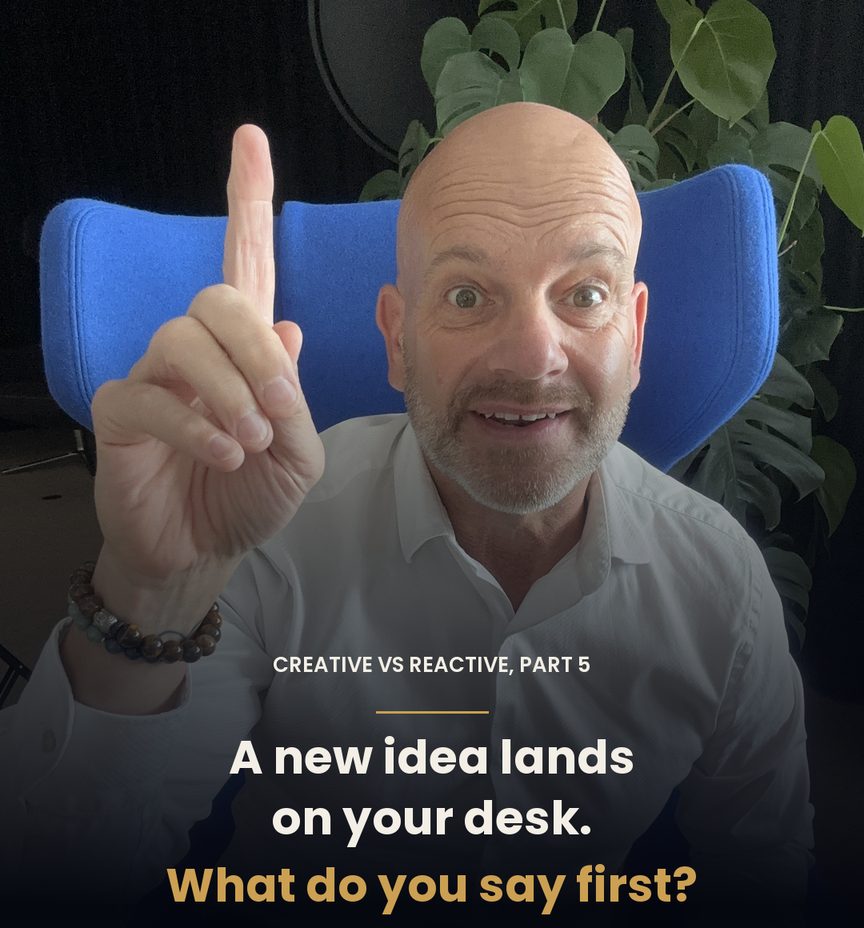
Five everyday moments. Two ways to answer each one.
In each of these situations, your first sentence is either creative or reactive. Your team feels the difference long before anyone says it out loud.
Six reasons. All of them practical.
Inside and outside
It measures how you lead and the beliefs behind it. That is where lasting change starts, not at the level of tips and techniques.
Linked to business results
According to Leadership Circle research, strong creative scores go together with leadership effectiveness and business performance.
A global benchmark
Your results are compared with more than 2.5 million surveys of leaders worldwide. Data, not opinion.
One page, not fifty
Self-view and others‘ view in a single circle. Leaders grasp in minutes what other reports take hours to explain.
Built for development, not judgement
No ranking, no verdict. Individual results never go to the organisation, so people can look at them without having to defend themselves.
Debriefed by someone who has been there
More than 100 LCP debriefs and over 25 years in corporate business at all levels. I know the pressure we are talking about.
Three ways in. Start where it fits.
Leadership Clarity Audit
An honest, data-based picture of how your leadership actually lands.
- Leadership Circle Profile, self-assessment or full 360°
- 90-minute debrief, one-to-one and confidential
- 60-minute strategy session: three levers for the next 90 days
Clarity & Execution
For senior leaders who want to change how they lead, not just understand it.
- Starts with the Leadership Circle Profile and a 90-minute debrief
- 1:1 sessions across 12 weeks, on your real situations
- WhatsApp support between sessions
Leadership Shadow Audit
For HR and L&D: make the patterns of a leadership group visible and work on them together.
- LCP 360° and a private debrief for each leader
- Half- or full-day team workshop on aggregated, anonymised patterns
- 30-minute team follow-up after four to eight weeks
- For the sponsor: group insights and where development will have the most impact
Four steps. From insight to behaviour.
Online, in your own time
Self-assessment only, or the full 360° with raters you choose yourself: your manager, peers and direct reports. Four to six weeks from start to debrief.
90 minutes, one-to-one
A confidential conversation about what your profile shows: what drives your behaviour, and what limits your potential under pressure. Invisible patterns made visible.
Three levers, 90 days
Two to three weeks later, 60 minutes. We define three concrete levers and one development focus, written down, not merely understood.
Where it continues
For teams, a workshop on anonymised patterns that builds a shared language for the conversations a team has been avoiding. For you, Clarity & Execution or The Leader as Coach.
Confidential by design. Individual results stay with the leader. They never go to the organisation, in any form, and no individual profile is shown in a team workshop.
“When awareness meets courage, transformation becomes inevitable.”
Inside experience. Outside perspective.
I spent more than 25 years in corporate business, at all levels. I know boardroom reality, KPI pressure and the dynamics no report shows. Today I help leaders see what drives them, and change it under real conditions.
Leadership Circle Profile Certified Practitioner · ICF PCC
You know who you are. Find out how you land.
In 30 minutes we look at where you stand and whether an LCP assessment makes sense for you or your leaders right now. If it does not, I will tell you.
30 minutes · confidential · no pitch
Part of Leadership 2030: clarity, decisions, execution
Leadership Circle Profile® is a registered trademark of The Leadership Circle. Illustrations on this page are my own. The Leadership Circle Profile model video is published by Leadership Circle.
The research behind the profile.
Two books by Bob Anderson and Bill Adams, the founders of Leadership Circle. I recommend them to leaders who want to go deeper, before or after their assessment.
Mastering Leadership
Robert J. Anderson, William A. Adams
The foundation of the Leadership Circle Profile. Why leaders who act from purpose rather than from fear get better results, and how that shift actually happens.
View on AmazonScaling Leadership
Robert J. Anderson, William A. Adams
How organisations build leadership capacity on a larger scale, so that better leadership does not depend on a few individuals.
View on AmazonAs an Amazon Associate I earn from qualifying purchases. If you buy through these links, I receive a small commission. The price stays the same for you.